


Vibify-offline MP3
4.485.00 Reviews
App Specs
- Version
- 1.3.6
- Updated On
- License
- Free
- Downloads
- 5,000,000+
- Developer
- Khan eCoding
- Categories
- Music & Audio
- Platform
- Android
Screenshots
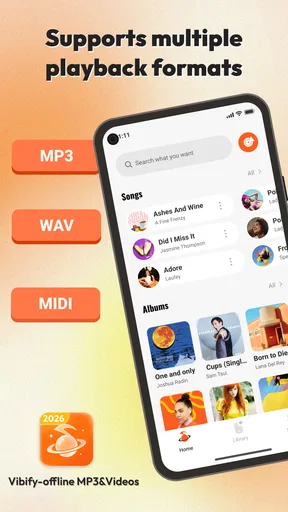
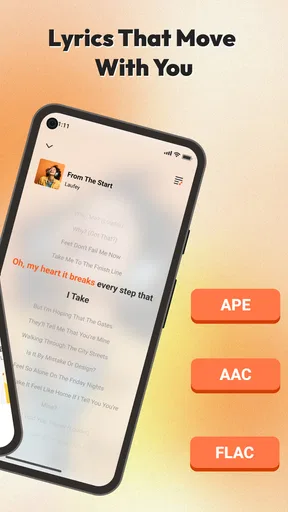
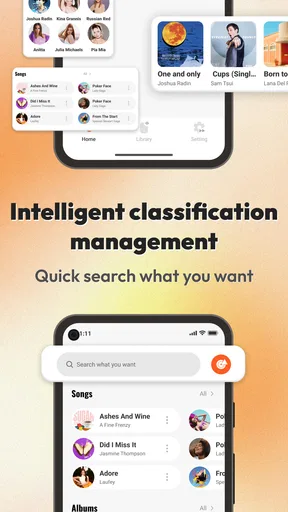
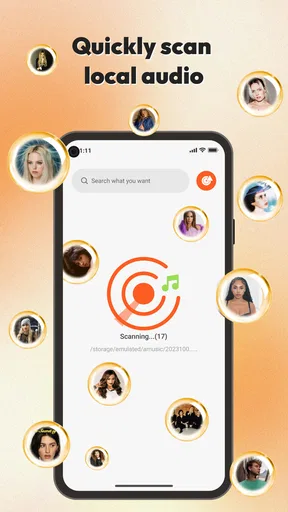
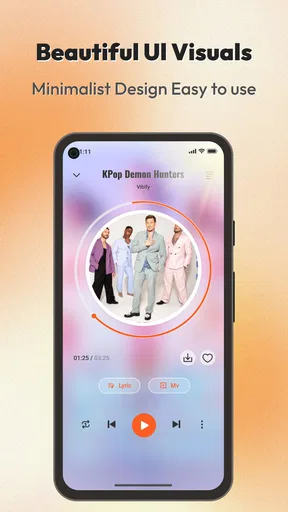
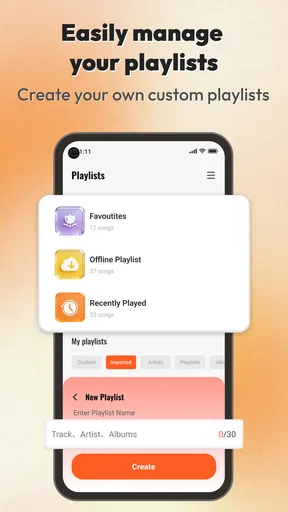
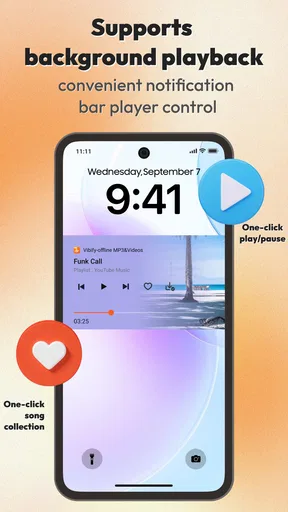
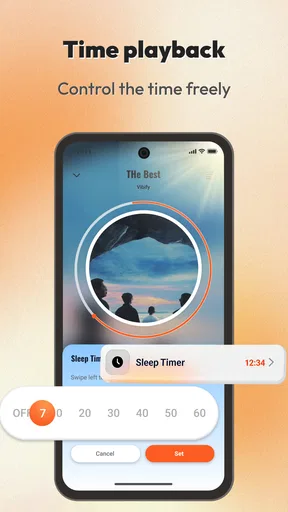
 Analysis by AppCompare
I spend a lot of time listening to music in ordinary situations: commuting, waiting for an appointment, working without a stable connection, or simply trying to avoid switching between several audio apps. That is why I approached Vibify-offline MP3 with a practical question rather than expecting a complete streaming service: can this free music and audio app make offline listening feel simple and useful?
My impression is that Vibify is aimed at people who want music available on their phone without treating the app as a huge discovery platform. Its store summary, “Turn Every Moment into Music,” points toward convenience, while the short description, “Vibify,” keeps the presentation deliberately brief. In daily use, that makes the app easier to understand as an offline MP3 companion than as a replacement for every music service you already know.
How Vibify fits into everyday listening
Vibify-offline MP3 is an app in the Music & Audio category, developed by Khan eCoding. It is free to install and carries an Everyone age rating, so its basic proposition is easy to approach: download it, try it, and decide whether its style of listening suits you without committing money first. That matters here because the app’s value is not tied to a paid subscription or a premium purchase that must be justified before you can understand the experience.
The app was released on July 11, 2025, and the current version is 1.3.5. It supports devices running Android 7.0 or later. Those details make it relevant to people using older Android phones, although compatibility alone does not guarantee that every device will feel equally quick or comfortable. On a small or aging phone, music apps can still differ noticeably in navigation, storage handling, and how easily you reach the track you want.
Its public reception gives a useful, but not conclusive, signal. Vibify has a 4.1 average from around 3.1 thousand ratings, alongside over 5 million installs. I read that as evidence that the app has reached a substantial audience and works well enough for many listeners, not as proof that it will match every person’s expectations. The smaller number of written reviews—59—also means I would pay more attention to my own first session than to a handful of detailed opinions.
The most important point about cost is straightforward: you can try Vibify without paying for access. I would not describe that as the same thing as proving that every possible function is unlimited or that the app has no restrictions; the confirmed price is simply free. For someone comparing it with paid music subscriptions, the immediate advantage is the absence of an upfront purchase decision. For someone comparing it with an established free service, the real question becomes whether Vibify’s offline focus is more useful than a larger catalog or stronger discovery tools.
What free access means in practice
Free access changes how I would recommend testing this app. I would not install it expecting to transfer the entire experience of a premium streaming platform. Instead, I would use a short trial period to see whether it fits a specific routine: listening to music already prepared for offline use, keeping playback uncomplicated, or reducing dependence on a constant connection.
Worth Reading Before You Choose

Flipboard Shows What News Apps Must Do Beyond the Feed

Switching to Android Auto Means Rethinking Your Driving Routine

Google Calendar Makes a Crowded Week Easier to Manage

Ludo King Makes the Most of the Minutes Between Plans

Baby Panda World Brings Quick Play to Modern Phones, but Its Game Library Feels Busy

ESPN’s Live Game View Makes Following Close Games Easier
That distinction is important when deciding value. A free app can be valuable because it solves one small problem reliably, even if it does not offer the breadth of a paid alternative. Vibify’s strongest financial argument is therefore its low-risk entry point. If it becomes your convenient offline player, it has delivered useful value without adding a subscription to your monthly expenses. If you need broad discovery, synchronized libraries, or a polished ecosystem across several devices, free installation by itself may not make it the better choice.
I also like the fact that the app can be judged by use rather than by a long-term commitment. Install it on the phone you actually carry, try it with the listening habits you already have, and notice whether you can get to music quickly. That is a more honest test than deciding from the name alone. Because Vibify is free, the main cost is your time and the storage or attention you choose to give it, rather than a purchase you may regret.
Where the value comes from
The value of Vibify is easiest to see in a realistic everyday scenario. Imagine leaving home with a playlist or a group of MP3 tracks you want available during a train ride. A conventional streaming app may be excellent when you are online, but an offline-oriented player is judged by a different standard: can you start listening without searching through a large service, worrying about a weak signal, or relying on a recommendation feed?
For that situation, I would organize my music before the journey, open Vibify when I am ready to listen, and keep the session focused on playback rather than discovery. That workflow is especially appealing when the music I want is already known. The app does not need to persuade me to try something new; it needs to stay out of the way while I listen.
A second useful case is a phone used as a dedicated music device. Some people keep an older Android handset for local audio, travel, exercise, or a child-friendly listening setup. Since Vibify supports Android 7.0 and later and is rated for Everyone, it may be worth testing in that role. I would still check how comfortable the interface feels on that particular phone, but the broad compatibility makes the idea practical rather than limited to the newest hardware.
A third insight is that offline listening can be a concentration choice, not only a connectivity solution. When I want background music while writing or doing repetitive work, a local MP3 workflow can reduce the temptation to browse endlessly. Vibify makes more sense in that moment than an app built around constant recommendations. The trade-off is that I must prepare what I want to hear; the benefit is a more deliberate listening session.
There is also a useful distinction between “offline” and “automatic.” Offline playback is only convenient when the music is already available to the app in a usable way. I would therefore prepare my tracks before leaving a reliable connection, confirm that the files appear as expected, and avoid discovering at the last minute that the material I wanted is not ready. This small habit is more important than it sounds because it turns the app from a hopeful travel companion into a dependable part of a routine.
How it compares with familiar alternatives
Compared with a mainstream streaming service, Vibify appears better suited to direct, prepared listening than to endless catalog exploration. Streaming platforms usually win when I want new artists, editorial playlists, cross-device continuity, or a large library managed for me. Vibify is more attractive when I already know what I want and prefer the simplicity of an offline MP3 approach.
Compared with the basic music player that comes preinstalled on a phone, Vibify’s appeal depends on how its playback experience fits your habits. A built-in player may be enough if you only need to tap a file and listen. Installing another app is worthwhile only if Vibify makes organizing or reaching your music more comfortable. I would not assume that a separate app is automatically an upgrade; I would compare the two with the same small collection of tracks and see which one requires fewer steps.
Compared with a paid subscription service, the financial difference is clear because Vibify is free. The comparison is less clear in convenience. A subscription can justify its cost for someone who values a managed catalog, personalized discovery, and a polished account-based experience. Vibify can justify its place for someone who wants to avoid that recurring expense and is happy to take more responsibility for preparing music.
That is why I would not call Vibify the universal winner in Music & Audio. It is a focused option. The more your listening depends on exploration and automatic recommendations, the less compelling an offline MP3 tool may feel. The more your listening depends on known tracks, limited connectivity, and quick local playback, the stronger its case becomes.
Small workflow choices that improve the experience
My first practical tip would be to create a compact travel selection instead of treating the phone as an unlimited music warehouse. A smaller collection is easier to test, easier to browse, and less likely to turn offline listening into a search exercise. Start with the tracks you genuinely replay, then expand only if the app remains comfortable to navigate.
My second tip is to test Vibify under the conditions where you actually need it. Use it at home first, then try it with connectivity unavailable or unreliable. This reveals whether your preparation routine works and whether the app feels useful without depending on an online environment. It also prevents a common mistake: assuming that an app described as offline will automatically solve every last-minute listening problem.
My third tip is to separate music organization from music discovery. I would use a streaming service, radio app, or another discovery tool when I want unfamiliar songs, then use Vibify for a prepared set that I already trust. That two-app approach may sound less elegant than one service doing everything, but it can be efficient. Each app has a clear job, and Vibify does not need to compete with a discovery platform on its weakest ground.
A fourth consideration is storage discipline. Local MP3 listening requires the phone to hold the music, so I would keep an eye on how much space my collection uses and avoid copying everything simply because there is room today. This is not a criticism unique to Vibify; it is the basic trade-off of offline audio. The app is most useful when the collection is intentional rather than uncontrolled.
Where I would be cautious
The main limitation is that an offline-focused workflow asks more from the listener. I have to know what I want, prepare it, and keep it organized. Someone who expects to type a mood into an app and instantly receive a changing stream may find that process restrictive. In that case, a streaming alternative is likely the better fit, even if it costs money or depends more heavily on an internet connection.
I would also avoid judging the app only by its install count or average rating. Around 3.1 thousand ratings and over 5 million installs show meaningful adoption, but they do not answer the personal questions that matter most: whether navigation feels natural on your phone, whether your preferred files are handled comfortably, and whether the app fits your routine. Those are precisely the details I would test before making it my default player.
The recent release history is another reason to keep expectations grounded. Vibify is a relatively new app, and version 1.3.5 may continue to change as Khan eCoding develops it. That can be positive because newer apps may improve quickly, but it also means I would keep a backup playback option for important trips or situations where music access matters. Free access makes experimentation easy, so there is little reason to force it into a role it has not yet earned on your device.
Privacy, permissions, battery behavior, and file-handling details are all areas I would inspect directly on the installation screen and in the app’s settings before making a final decision. I would not infer those points from the app’s name or category. A careful user should know what the app requests, how it behaves in the background, and how easily it can be removed if it does not fit. That is sensible practice for any music app, especially one being tested as a daily tool.
Who should install it
I think Vibify is a good candidate for listeners who already keep MP3 music on an Android phone and want a free way to make that collection part of a regular offline routine. It also suits people who travel through unreliable coverage, prefer predictable playlists, or want to reduce the number of decisions made during a listening session. Its Everyone rating and support for Android 7.0 or later broaden its practical audience, including users with older compatible devices.
It may also suit a person who is tired of paying for a music subscription but does not need a constantly refreshed catalog. In that case, the free price is not just a minor benefit; it changes the calculation completely. You can put the money you would have spent elsewhere while accepting the work of managing your own music.
I would skip it if my priority is discovering new releases, receiving highly personalized recommendations, or keeping one synchronized library across a broad collection of devices. I would also skip it if I do not already have music ready for offline use and do not want to spend time preparing it. A free app is not a bargain when its workflow conflicts with the way I listen every day.
My buy-or-skip verdict
There is no purchase decision to make here in the usual sense: Vibify-offline MP3 is free, so my verdict is really about whether it deserves space on your phone. I would install it if I wanted a low-risk offline music experiment, especially for known MP3 tracks and travel routines. I would start small, test playback away from a dependable connection, and compare it directly with the player already on my device.
For me, the app’s value comes from focus. It is not trying to be the answer to every music habit; it is most convincing when I want prepared audio without adding another paid service. That makes it a sensible tool for practical listeners, older compatible phones, and anyone who values control over discovery.
My final recommendation is positive but specific: choose Vibify for free, prepared offline listening, not as a guaranteed replacement for a full streaming ecosystem. The 4.1 average and broad adoption make it worth trying, while the free price removes much of the risk. If your ideal music app should surprise you with new songs and manage everything automatically, look elsewhere. If you want your own music ready when the connection is not, Vibify is a reasonable app to test.
Pros
- Works without an internet connection once songs are stored locally.
- Simple interface makes browsing downloaded tracks quick and convenient.
- Uses less mobile data than streaming music services.
- Supports personal music collections without requiring a monthly subscription.
- Offline playback helps preserve battery during travel or commutes.
Cons
- You must obtain and transfer music files yourself before listening offline.
- No built-in access to major streaming catalogs or new releases.
- Local storage can fill quickly when saving high-quality MP3 files.
- Features may feel limited compared with full streaming music apps.
- Compatibility with some audio formats or device files may vary.
FAQs for Vibify-offline MP3
What is Vibify-offline MP3, and what can I use it for?
Vibify-offline MP3 is designed for listening to music files stored locally on your device without requiring a continuous internet connection. It can be useful for users who already own MP3 tracks and want a simple way to organize and play them while traveling, commuting, or saving mobile data. It should not be confused with a service that automatically provides copyrighted music for free.
Can Vibify-offline MP3 play music without Wi-Fi or mobile data?
Yes, the main advantage of Vibify-offline MP3 is offline playback. After compatible MP3 files have been downloaded or transferred to your phone, you can listen without Wi-Fi or mobile data. However, the app cannot play songs that are not already available on your device, and some features, such as updates, advertisements, or online support, may still require an internet connection.
Which audio files and devices are supported by Vibify-offline MP3?
Vibify-offline MP3 is primarily intended for MP3 music files saved on an Android or iOS device, depending on the version available for your platform. Compatibility can vary according to the operating system, file location, storage permissions, and the exact audio format. Before downloading many tracks, it is worth checking whether the app can access your music folders and whether your files appear correctly in its library.
Does Vibify-offline MP3 include music, or do I need to provide my own songs?
Vibify-offline MP3 generally functions as a local music player rather than a catalog that supplies songs. You will normally need to add your own legally obtained MP3 files through device storage, downloads, or file transfers. The app does not automatically grant permission to download copyrighted tracks, so users should make sure their music collection comes from legitimate sources and complies with copyright laws.
What permissions, costs, or limitations should I know about before installing it?
Before installing Vibify-offline MP3, review the permissions requested for storage, media access, notifications, or other functions, as these may differ between Android and iOS. The app may be free to download but could contain advertising or optional purchases, depending on the current release. Also consider available storage, battery usage, privacy settings, and whether advanced playback features are restricted in the free version.


